
D.C.’s Highest Court Strikes Down Magazine Ban: What It Could Mean for Colorado
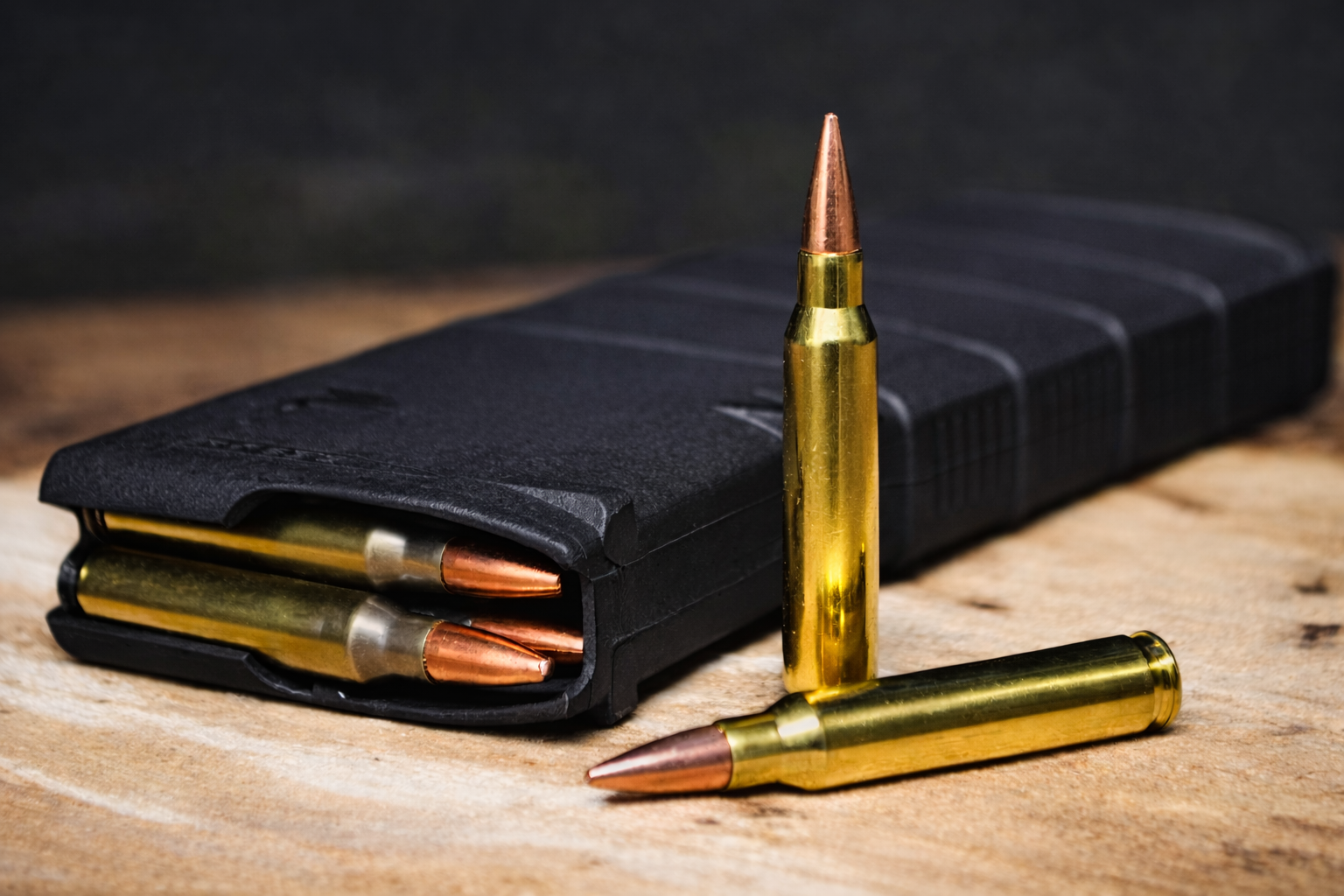
The District of Columbia Court of Appeals, the equivalent to a state supreme court if DC had one, has struck down the district’s ban on magazines holding more than ten rounds, delivering a ruling that could ripple well beyond DC.
In a 2–1 decision, the court ruled that the district’s prohibition on so-called “large capacity magazines” violates the Second Amendment under the framework established by the U.S. Supreme Court in District of Columbia v. Heller, New York State Rifle & Pistol Association v. Bruen, and reaffirmed in United States v. Rahimi.
The case arose after a defendant, Tyree Benson, was charged under D.C.’s ban on magazines capable of holding more than ten rounds. When the court determined that the ban itself was unconstitutional, it didn’t simply dismiss that single charge. The ruling also vacated three additional firearm-related convictions that were dependent on the magazine restriction, leaving only limited options for prosecutors moving forward.
That cascading reversal highlights an often overlooked reality about modern gun laws: when a foundational prohibition falls, the enforcement framework built on top of it can collapse as well.
The Court’s Reasoning Under the Bruen Framework
The majority opinion applied the analytical structure laid out in Bruen with exceptional clarity.
First, the court determined that magazines are protected “arms” under the Second Amendment because they are integral components of modern firearms. A firearm designed to accept a detachable magazine cannot function as intended without one.
Second, the court found that magazines capable of holding more than ten rounds are unquestionably in common use nationwide. Tens of millions of Americans own them, and they are standard equipment for many of the most widely sold firearms in the United States.
Once those two points were established, the constitutional question became straightforward under Bruen: could the government show a historical tradition of banning such arms?
The answer was no.
The court found no meaningful historical analogue supporting a categorical prohibition on commonly owned firearm components. Under the Supreme Court’s modern Second Amendment framework, that absence proved fatal to the law.
Why This Matters Beyond Washington, D.C.
While the ruling technically applies only within the District of Columbia, the reasoning directly challenges similar laws across the country.
More than a dozen states maintain capacity limits on magazines, including Colorado, California, Connecticut, Delaware, Hawaii, Illinois, Maryland, Massachusetts, New Jersey, New York, Oregon, Rhode Island, Vermont, and Washington. Colorado’s current statute prohibits the sale or transfer of magazines capable of holding more than fifteen rounds.
The structure of that law mirrors the D.C. restriction in key ways: it defines certain magazines as illegal based solely on capacity and criminalizes possession tied to that threshold.
Under the logic used by the D.C. court, those kinds of restrictions face a fundamental constitutional problem.
If magazines exceeding a particular capacity are widely owned, integral to modern firearms, and unsupported by historical precedent for prohibition, the government’s justification for banning them becomes difficult to sustain.
And once courts acknowledge that magazines holding 11, 15, or 17 rounds are in common use, the line between those magazines and those holding 30 rounds begins to look less like a constitutional boundary and more like an arbitrary legislative choice.
The Dissent Ignorance
The dissent in the case illustrates the tension at the center of modern gun-law litigation.
Chief Judge Anna Blackburne-Rigsby argued that even if certain magazines are commonly owned, the record did not show that 30-round magazines are commonly used for self-defense.
In defending the district’s ability to maintain the ban, the dissent wrote:
“The majority undermines the District’s ability to ensure public safety and regulate 30-round LCMs, which have been used for dangerous and unlawful purposes, including mass shootings.”
The reasoning reflects an approach the Supreme Court explicitly rejected in Bruen: interest balancing.
In other words, the dissent weighs the perceived public safety benefits of a restriction against the constitutional protection of the right itself.
But Bruen made clear that courts are not supposed to decide Second Amendment questions by balancing policy preferences against constitutional guarantees. Instead, the question at had should focus on history and tradition.
The dissent also attempts to draw a distinction between different magazine capacities, writing:
“But even accepting that standard handgun magazines typically holding 11, 15, or 17 rounds of ammunition are in common use, there is no similar support for 30+ round magazines.”
That reasoning creates a logical problem.
If courts accept the idea that governments may prohibit magazines based on incremental capacity distinctions, then legislatures could theoretically regulate magazines at almost any line they choose: 30 rounds, 20 rounds, 15 rounds, or even lower.
Under that framework, constitutional protection could be narrowed one round at a time.
The dissent goes further, writing:
“An extended ammunition clip capable of holding 30+ rounds is dangerous and is not commonly used for a lawful purpose such as self-defense.”
The use of the term “clip” rather than “magazine” may appear minor, but the distinction is significant in firearms terminology.
A clip is a device used to load ammunition into a magazine. A magazine is the component that stores and feeds ammunition into the firearm itself.
This error highlights a broader concern frequently raised in Second Amendment litigation: courts are often asked to evaluate highly technical firearm regulations while demonstrating limited familiarity with the mechanical details involved.
Why This Could Push The Supreme Court to Take Up Magazine Bans
Magazine-capacity restrictions are quickly becoming one of the most likely Second Amendment issues to hit the U.S. Supreme Court.
Several cases challenging these laws are currently moving through the federal court system, most prominently Duncan v. Bonta, which challenges California’s magazine restriction.
The case has already traveled through multiple rounds of litigation following the Supreme Court’s decision in Bruen and is now positioned for potential review again.
Other courts, however, have begun reaching the opposite conclusion when applying the Bruen historical framework more strictly.
The recent decision by the District of Columbia Court of Appeals striking down its magazine ban adds another opinion to that side of the debate.
When federal courts begin reaching different conclusions about the constitutionality of similar laws, it creates what is known as a circuit split, one of the most common reasons the Supreme Court agrees to hear a case.
That dynamic is already beginning to take shape.
What This Could Mean for Colorado’s Magazine Capacity Law
Colorado’s magazine restriction has existed since 2013, banning magazines that hold more than 15 rounds, but it has long been criticized for both constitutional and practical reasons.
The law has also been tied up in litigation for years. Gun owners and advocacy groups challenged the ban almost immediately after it was enacted, and the case eventually reached the Colorado Supreme Court in Rocky Mountain Gun Owners v. Hickenlooper. In 2020, the court allowed the law to stand, concluding that it did not violate the Colorado Constitution.
That decision was issued under the older Second Amendment framework that existed before the U.S. Supreme Court’s Bruen ruling, which replaced the “interest balancing” approach courts had previously used, with a strict historical-tradition test.
The Colorado court also leaned heavily on the idea that detachable magazines were merely accessories rather than protected arms themselves, an assumption that has increasingly been rejected by courts applying the modern Bruen framework.
Because of that shift in constitutional analysis, the broader federal Second Amendment questions raised by Heller and Bruen were never fully resolved.
Additionally, enforcement has been inconsistent, and the law itself contains grandfather provisions that allow possession of older magazines while prohibiting the acquisition of new ones.
If the Supreme Court eventually rules that banning commonly owned magazines violates the Second Amendment, the implications would extend far beyond a single state.
Capacity limits vary widely – ten rounds in some states, fifteen in others – but the underlying constitutional question remains the same.
Can governments prohibit firearm components that are owned by tens of millions of Americans and widely used for lawful purposes?
The D.C. Court of Appeals has now answered that question one way.
Whether the U.S. Supreme Court ultimately agrees may determine the future of magazine bans nationwide.
And for states like Colorado, that answer could reshape the legal foundation of firearm laws entirely.
Could This Impact Colorado’s SB25-003
The constitutional questions surrounding magazines may also intersect with Colorado’s newest major gun law, Colorado Senate Bill 25-003.
SB25-003 does not directly ban magazines themselves. Instead, the law targets semiautomatic firearms capable of accepting detachable magazines, requiring buyers to first obtain a permit-to-purchase through their local sheriff and Colorado Parks and Wildlife (CPW) before acquiring those firearms. If they choose not to obtain the permit, those specified firearms are banned outright.
In practical terms, that definition captures a wide range of commonly owned firearms, including many of the most popular rifles and pistols sold in the United States.
The connection to the magazine litigation is structural.
Modern semiautomatic firearms are designed around detachable magazines. When courts analyze whether magazines themselves are protected components of a firearm under the Second Amendment, it inevitably raises questions about laws that regulate the firearms because they use those same magazines.
The D.C. ruling reinforces the principle that firearm components widely owned by law-abiding Americans fall within the scope of the Second Amendment’s protection. If that reasoning continues to gain traction in federal courts, particularly if the U.S. Supreme Court weighs in on magazine bans, it could influence how courts evaluate laws that single out firearms based on their ability to accept detachable magazines.
That does not mean SB25-003 would automatically be invalidated, unfortunately, but it could come into play during litigation.
But it does highlight how many of the constitutional questions surrounding magazines, firearm components, and “common use” are still working their way through the courts.
And as those cases move forward, they may shape the legal landscape surrounding Colorado’s firearm regulations for years to come.
Stay ready. Stay loud.
Colorado gun owners aren’t going down without a fight.
Make a donation of $10 or more and get your choice of a sticker below.



Help Us Hold the Line
We read every bill, track every hearing, and expose every attack on your rights.
Your donation powers the tools, outreach, and real time education to stop this madness.
The Second Amendment doesn’t defend itself. We do.
See you in January