
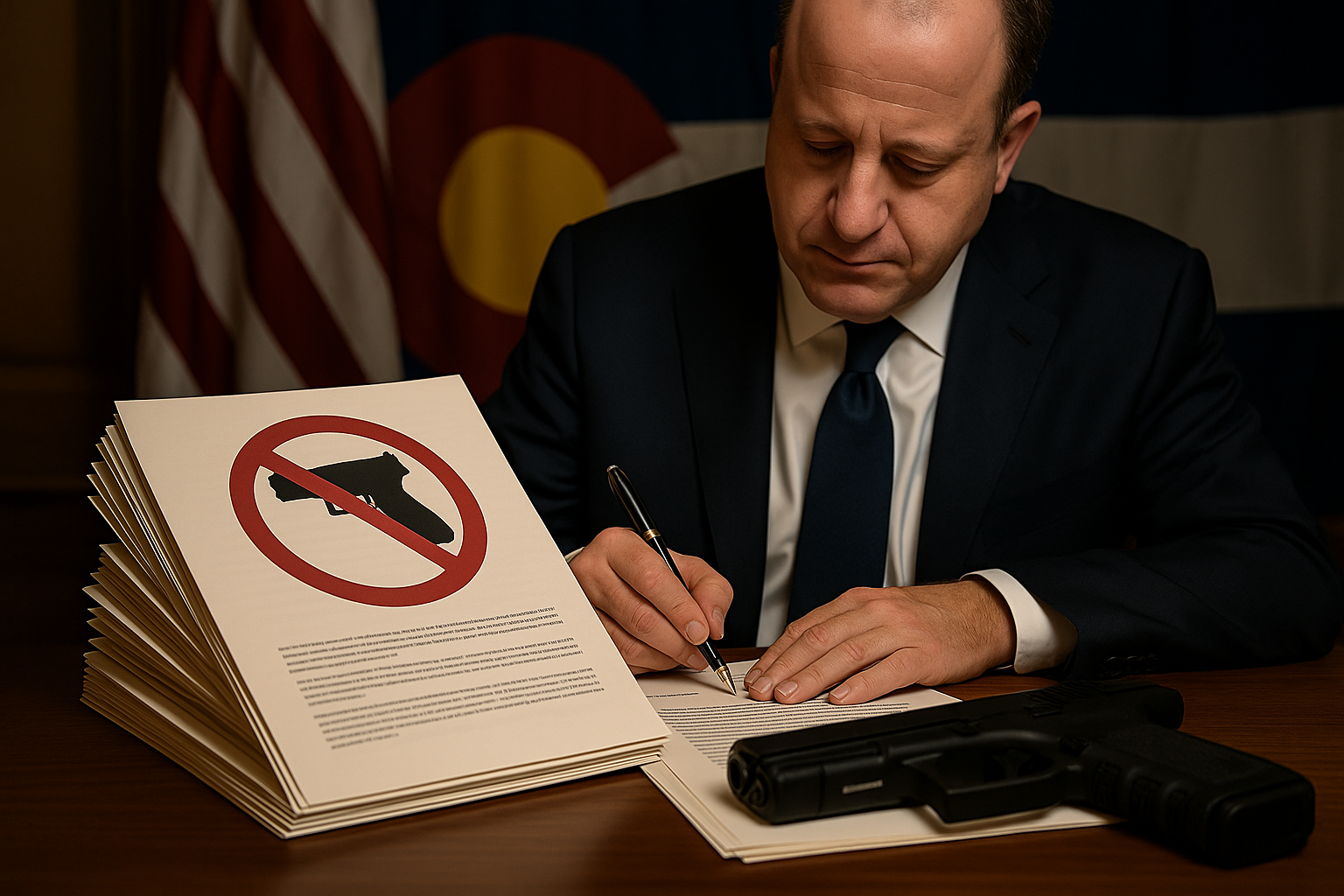
Colorado Advances Three Gun Control Bills to Governor’s Desk
Three more gun control bills have cleared the Colorado legislature and are on their way to Governor Polis’ desk, and another seems to have stalled…for now.
One was gutted under pressure. One was heavily amended but still expands long-term infrastructure. And one quietly hands more control to the state with consequences that will depend entirely on who’s in charge down the road. And yet another sits stalled on the calendar.
- HB26-1144 3D Printing Regulations (passed) – was stripped of its most aggressive provisions related to digital files, but still creates new charges around manufacturing.
- HB26-1126 Gun Dealer Regulations (passed) – builds out long-term regulatory infrastructure, including dealer-level record systems and rulemaking authority over security requirements.
- HB26-1302 CBI Firearm Background Check System Changes (passed) – shifts control over firearm background check operations away from statute and into agency discretion.
- SB26-043 Barrel Restrictions and Registry (stalled) – requires barrel sales and transactions to go through an FFL while forcing FFLs to maintain a record of barrel buyers.
*In case you missed it, SB26-004 ERPO Red Flag Expansion passed in March and has been signed by the governor.
Let’s break it down…
HB26-1144 The Dystopian 3D Printer Gun Bill Got Gutted
This bill started as one of the most aggressive firearm bills introduced this session. It targeted private firearm manufacturing by prohibiting the use of 3D printers, CNC machines, and other computer-controlled tools to produce certain firearm components, something Colorado has already addressed under 2023 “ghost gun” legislation.
But HB26-1144 didn’t stop there. It went after possession and distribution of digital files like CAD designs, STL downloads, and the sharing of instructions online, basically turning “digital information” into contraband.
That entire section is now gone.
The Senate amendments stripped out every reference to digital files. No ban on possession. No regulation of online sharing. No penalties tied to downloads. No attempt to control design distribution. That collapse came after sustained public pressure and a clear veto threat from the Governor. Bill sponsors Senator Tom Sullivan and Senator Katie Wallace expressed their disappointment in the governor for not addressing his concerns before the bill had advanced as far as it did.
What remains is a manufacturing-focused provision targeting:
- Frames and receivers
- Magazines over 15 rounds
- Rapid-fire trigger devices
Every one of those items is already illegal under Colorado law though.
- Manufacture and possession of unserialized frames and receivers was covered under the 2023 “ghost gun” law.
- Possession of magazines over 15 rounds was banned in 2013, with a penalty increase passed in 2025 as part of SB25-003. The only exception would be grandfathered mags that were manufactured prior to the 2013 law going into effect.
- Rapid-fire devices such as FRTs and bump stocks were fully banned under SB25-003 making their possession a felony.
So, since this bill does not create new prohibited conduct, what does it actually do? It creates a “charge stacking” scenario by building a second crime layer on top of conduct that is already criminal.
If someone possesses a banned magazine today, that’s already a crime. Under this bill, if prosecutors argue that the same magazine was manufactured using a 3D printer or CNC machine, they can now file an additional charge.
Groups like the ACLU have long opposed overlapping criminal statutes that allow prosecutors to pile on charges for the same underlying act. More charges mean more pressure, fewer plea options, and higher exposure to incarceration and excessive fines without any change in behavior.
In its final form, HB26-1144, is not the sweeping digital crackdown it was designed to be. But it is a structural expansion of prosecutorial power over rights that are constitutionally protected. And we know the portion of this bill that was cut will rear it’s ugly head again next year.
HB26-1126 Massive Burdens on FFLs and Registry Infrastructure Still Intact
HB26-1126 had some substantial amendments, but the core concerns remain unchanged.
This bill expands requirements on federally licensed firearm dealers (FFLs), including:
- New security mandates
- Expanded recordkeeping requirements
- A system requiring dealers to maintain detailed records of firearm sales, transfers, and rentals
The bill expands Colorado’s firearm dealer regulatory system by requiring dealers to maintain detailed records of ALL firearm transactions and making those records available for inspection by the state. Dealers must record identifying information about the purchaser – including their name, age, and address – along with detailed information about the firearm involved in the transaction, such as the make, caliber, finish, and serial number, as well as the date of the transaction and the identity of the employee or individual who conducted the transfer. In practice, this creates a state-accessible record system of firearm transactions maintained by dealers. They won’t call that a registry, but I say call it whatever you want, it’s a registry. It is a structured, accessible dataset tied to firearm ownership and transactions.
The most significant change came through an amendment that shifts authority to the Colorado Department of Revenue’s (DOR) Firearms Dealer Division.
The original version of the bill included new nonsensical security requirements FFLs were going to have to abide by – such as bars on doors and windows, video surveillance tied to law enforcement, and more. The bill now allows the DOR to determine what those security requirements are through rulemaking and stakeholding with FFLs. Some say this is an improvement; others feel it is worse as now they have handed full power and control over to a bureaucratic agency with no guardrails…meaning what they impose could actually be worse.
Any non-compliance or errors on the part of FFLs can result in fines up to $75,000 and revocation of their Colorado firearm dealers license.
HB26-1302 CBI Now Authorized to Create “Flexible” Hours to Process Firearm Background Checks
HB26-1302 is being framed as an administrative update. It’s not that simple.
The bill allows the Colorado Bureau of Investigation (CBI) to determine its own hours for processing firearm background checks. In the bill, it states is that Form 4473s must be accepted between 9 a.m. and 9 p.m, even if no one is working to process them. The agency is only required to process them during its self-defined “business hours.” Right now, those hours are set in statute. This bill removes that guardrail and it could have long term impacts.
Once that authority shifts from state statute to agency discretion, it can change quietly and repeatedly depending on leadership. Different Governor, different appointments. Different appointments, different policy. Different policy, different access.
What is being sold as administrative flexibility today can become delayed processing, bottlenecks, or inconsistent availability tomorrow.
This bill also got caught up in some drama on the House side.
The bill had bipartisan sponsorship, including Republican State Representative Anthony Hartsook. On second reading, four Republicans – Hartsook, Minority Leader Jarvis Caldwell, Rep Carlos Barron, and Rep Mary Bradfield – joined Democrats to advance it.
Then everything blew up on X with Caldwell publicly attacking his Republican colleagues for not supporting the measure.
By third reading the heat was on those Republicans, and Hartsook removed his name from the bill. On final passage, every Republican voted against it. In the Senate, every Republican voted against it.
At a time when Democrats hold a near super-majority and do not need Republican support to pass firearm legislation, the decision by some Republicans to help advance the bill has created visible fractures in trust.
SB26-043 Firearm Barrel Restrictions and Registry
This bill is currently stalled. It needs to pass one more vote in the House Chamber before it would head to the governor, but instead of voting on it, every day they “lay it over”, meaning they just reschedule it for a vote the next day…then don’t do it.
Track the rest of the 2026 Colorado gun related bills on our Legislative Watch page.
Stay ready. Stay loud.
Colorado gun owners aren’t going down without a fight.
Make a donation of $10 or more and get your choice of a sticker below.



Help Us Hold the Line
We read every bill, track every hearing, and expose every attack on your rights.
Your donation powers the tools, outreach, and real time education to stop this madness.
The Second Amendment doesn’t defend itself. We do.
See you in January